How to not lose your cargo: surviving suicide ganks in high-sec
All the Jita↔production traffic funnels through two or three systems where haulers get cracked open — for the loot and just for the fun of it. We break down CONCORD mechanics, chokepoints like Uedama and the live defence for each hull — T1 industrial, freighter, blockade runner and deep-space transport: a scout ahead, a webbing alt and cloak tricks, not a hope pinned on tank and a modest load.
Key takeaways
- CONCORD punishes, it doesn’t protect: it arrives in ~19 s (0.5) to ~6 s (1.0) after the first shot and doesn’t save the victim. There is no magic fit — a volley of a dozen or two Tornados is enough at any security.
- A gank isn’t always about the math: loot drop is ~50% and some gankers weigh profitability (a rough guide is ~3000 ISK per 1 EHP), but many hit for the killboard and the fun — even empty freighters die in Uedama. “Haul less” lowers the odds but it isn’t armour.
- Defence by hull is active, not tank (tank is nearly useless against pros): T1 — cargo ≤200M + an MWD with a cloak; freighter/JF — a scout a jump ahead and a webber with three webs (don’t haul 10+ billion); blockade runner — a covert cloak, an unscannable hold (expensive and light); the anvil (DST) — the MWD+cloak trick (its fleet hangar scans and drops).
- The main chokepoint after Niarja moved to Pochven (2020) is Uedama (0.5), with Sivala and Balle nearby. Check the route on zKillboard and EVE Gatecheck before undocking, and never fly on autopilot.
Why the hauler is the first thing that ruins you
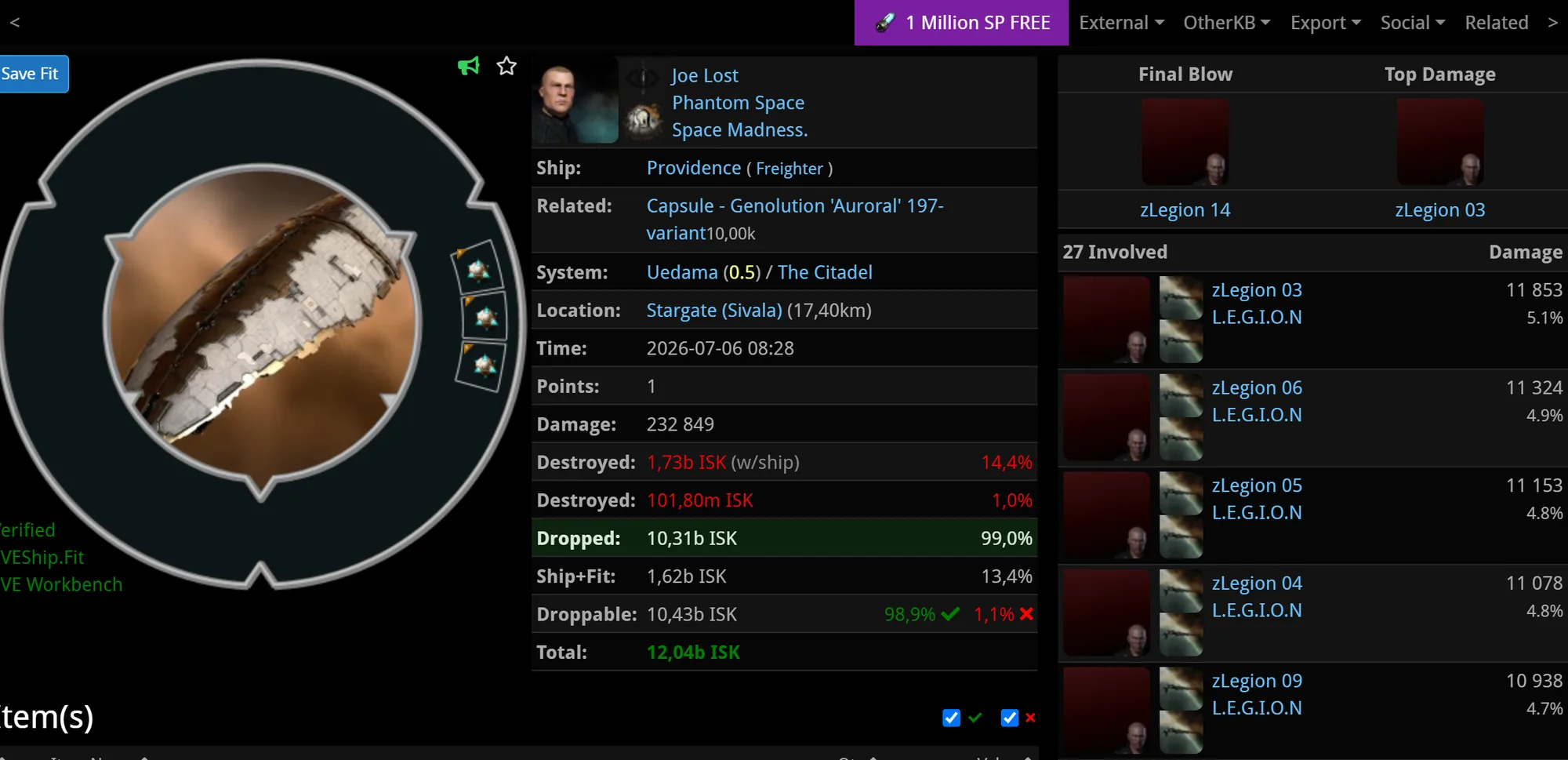
All trade in EVE rests on hauling: raw materials go from Jita to production, finished goods come back to Jita. And nearly all of that flow passes through two or three systems — bottlenecks where haulers get cracked open in batches. Some do it by the numbers, for the loot; but plenty gank for content, the killboard and the fun of it. Uedama alone racks up a pile of empty freighters and jump freighters every week — ships with nothing worth taking: they were killed not for the cargo but because someone could. Counting on “I’m not worth hitting” is naïve.
Hence the core point the whole guide is built on: real defence is active piloting, not a hope pinned on tank or a modest load. For a freighter and jump freighter that’s a scout ahead and a webbing alt; for the anvil and T1 it’s the MWD+cloak trick; for the blockade runner it’s a covert cloak. Hauling less per trip helps too — it lowers the chance you get picked — but on its own it won’t save you. From here we cover both the mechanics of a gank and the live defence for each hull.
How a gank works: CONCORD punishes, it doesn’t protect
The main thing to understand about high-sec: CONCORD — the local police — arrives only after the crime is committed, and it doesn’t save the victim, it punishes the attacker. It shows up a few seconds after the first shot, locks and kills the gankers — but by then your ship is most likely already dead. CONCORD exists to punish, not to protect. There is no magic fit that “survives” a gank: a volley from a dozen or two Tornados is enough for anyone.
CONCORD’s response time scales with security: about 19 seconds in a 0.5 system, ~10 in 0.7, ~6 in 0.9–1.0. Hence the myth that 1.0 is “safe” — it isn’t. Security only shortens the window, but an alpha ship (Tornado, Thrasher) needs just one volley, and the fleet is simply made bigger. That’s why gankers love 0.5 systems like Uedama, where the window is longest, though they’ll hit in 1.0 if they want to.
Some gankers count like accountants: on destruction each item in the hold drops as loot with a 50% chance, and they weigh whether the expected drop pays for a batch of disposable Catalysts (a couple of million each). A rough guide to not gift-wrapping yourself is about 3000 ISK per unit of the hull’s EHP. But don’t kid yourself: others shoot with no math at all — for the killmail, the stats or just for fun, and an empty hold won’t save you here. So “haul cheaper” is one layer of defence, not armour.
At the gate you usually see not the whole fleet but a quiet picket: a neutral alt with a cargo scanner (reads your hold and relays the price tag), a battleship bumper — most often a Machariel (shoves you with its hull, keeping you from entering warp; bumping is not a crime, CONCORD stays silent) — and sometimes a rookie ship that puts an aggression timer on you so you can’t simply log off. The gank fleet itself arrives once the scanner confirms you’re worth it.
Chokepoints: where exactly they wait for you
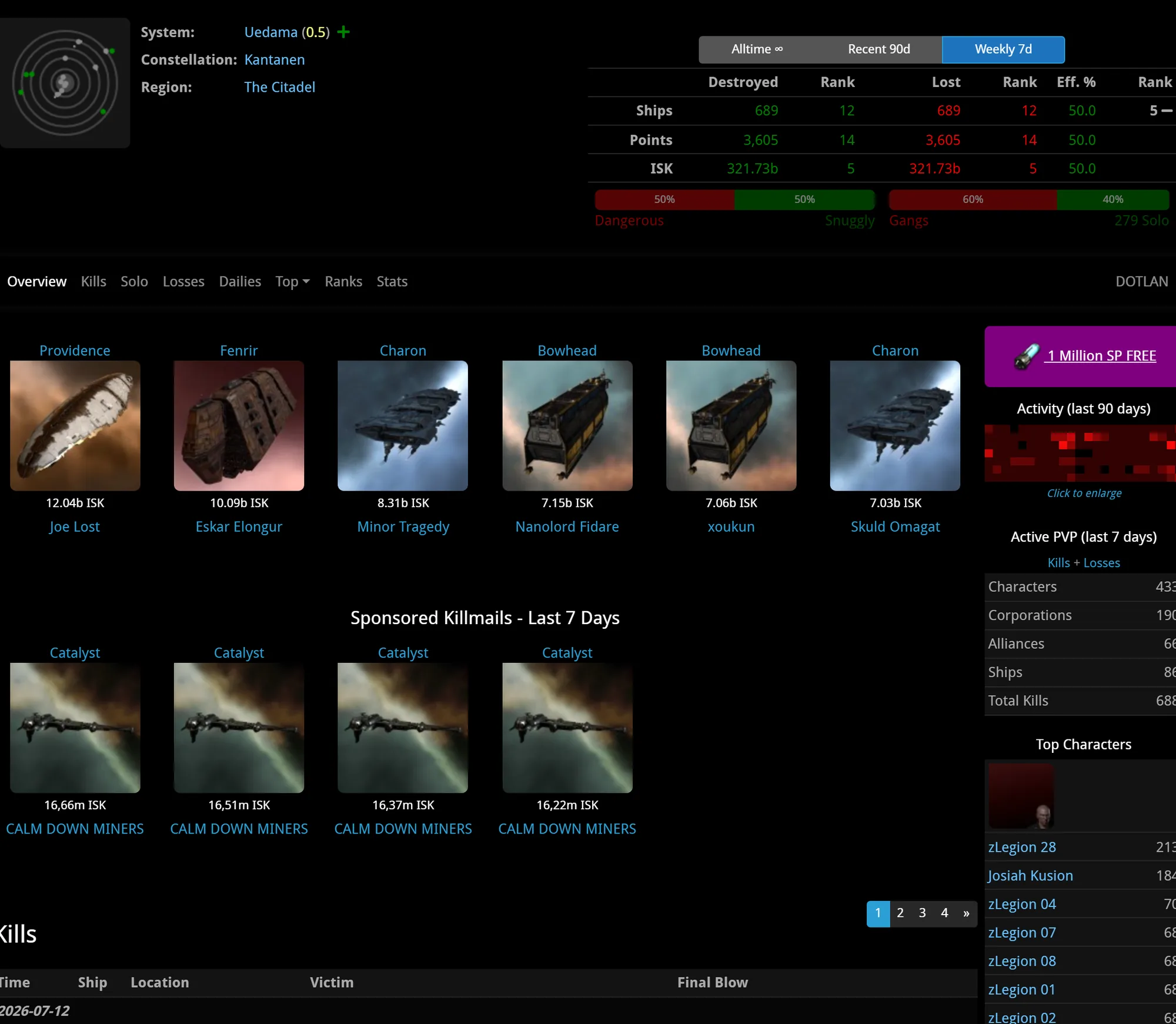
Ganking lives on bottlenecks — systems the whole cargo flow must pass through. After Niarja moved into Pochven (2020) and the Jita↔Amarr route re-formed, the main chokepoint became Uedama (0.5) — the hottest system in high-sec and one of the bloodiest in all of EVE: thousands of ships destroyed and trillions of ISK per quarter. Nearby are Sivala (0.6), where they catch you a jump earlier, and Balle, a junction on the routes to Hek.
The practice is simple: know your route and check it before undocking. zKillboard shows what was killed in a given system and when; EVE Gatecheck shows fresh gate kills along the route. See a batch of haulers freshly killed in Uedama within the last hour — then wait for the wave to pass, detour, or send a scout a jump ahead before you jump in yourself. Gank activity comes in waves: empty one moment, a wall the next, and checking the last hour of gate kills is the most honest read on which phase you’re in.
Buddy, why are you hauling three billion in an Iteron?
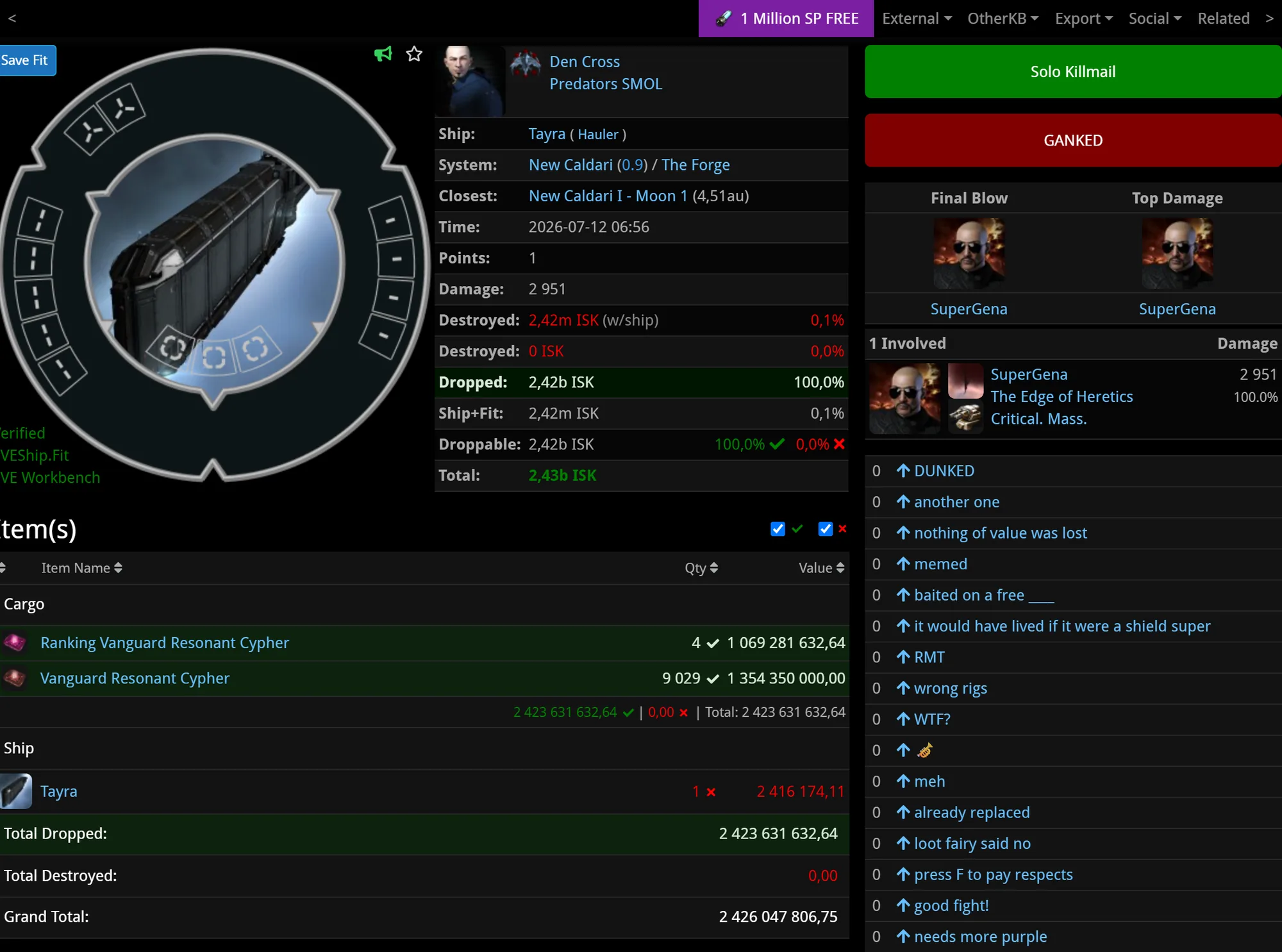
Let’s start with the newbie’s most common and most foolish death. A T1 industrial — Iteron, Epithal, Badger — costs pennies and has neither a tank nor a cloaked hold. It’s a fine ship for hauling cheap materials in bulk. But every day someone loads two or three billion into an Iteron and flies through Uedama on autopilot. A solo ganker takes him down with a single Catalyst without getting out of his chair. Buddy, why are you hauling three billion in a ship worth a couple of million?
The rule for T1 is simple: haul only as much as you can afford to lose — a benchmark of no more than ~200 million per trip. More than that — split it across trips or take a more serious ship. And never, ever haul anything valuable on autopilot: it drops you out of warp 15 km from the gate — right where the bumper sits — and makes you an easy mark.
The second layer for T1 is a slip-through fit: a normal cloak plus an MWD to run the camp with the MWD+cloak trick (the mechanic is detailed below, in the anvil section — it’s the same for T1 and DST). A cheap hauler with a cloak and a 200M cap slips past even an active Uedama. The rule is simple: keep the cargo within those bounds and T1 stays a workhorse; need to move something expensive and that’s what the blockade runner and the anvil are for, not an Iteron.
Freighter and jump freighter: slow and fat
A freighter (Charon, Obelisk, Providence, Fenrir) and a jump freighter are a huge hold of millions of cubic metres, but with a tortoise’s speed and no cloak. Understand this about tank up front: on its own it’s nearly useless. A mountain of EHP will save you from a stray passer-by who fired a Tornado for fun, maybe — but from an organised fleet of pros no bulkhead saves you; they simply bring more ships. The one thing bulkheads should push out of the low slots is cargo expanders: never cut your own EHP with hold expanders when carrying anything expensive.
The real defence of a freighter and jump freighter is two alts: a scout and a webber (often the same second account). The scout goes a jump ahead and looks at the gate you’re about to jump into: clear — you jump, a picket is sitting there — you wait or detour. The webber webs your freighter and sharply cuts its time to enter warp: the window in which gankers must tackle you drops from 20+ seconds to a handful. The best webber is a Rapier recon with three webs: 999 times out of 1000 all three land and the freighter snaps into warp instantly; once in a while two of them don’t fire — why, I never worked out — and then the warp isn’t instant. You can start with any cheap frigate that fits three webs — a Slasher, for instance. And yes: if you could afford the freighter and a few billion of cargo, you can afford a second account with a webber. Begrudge the account while hauling billions in one trip — well, pour one out.
The webbing mechanic takes care. First, the webber and the freighter must be in a duel with each other: applying a web to another ship is aggression, and without a duel CONCORD comes for your alt. A shared fleet isn’t enough — fleet membership grants no right to shoot your own; it’s the duel that authorises the webbing. Second, order matters: the freighter hits warp first, and only then does the webber lock it and slam all three webs at once. The webs sharply raise align speed, the heavy freighter reaches full velocity almost instantly — and enters warp before the picket can land tackle. Get the order wrong (webs first, then warp) and the effect is lost.
Why three webs specifically is a matter of warp physics. A ship snaps into warp once it accelerates to 75% of its maximum velocity. Say the max is 100 m/s — then you need 75 to warp. Each web roughly halves the maximum velocity: the first from 100 to 50, the second to 25, the third to ~12.5 — and the warp threshold (that same 75%, now of a much smaller max) drops by the same factor. The freighter hits warp and starts accelerating before the webs land, so by the time they apply it has already passed the sharply lowered threshold — and enters warp instantly. That’s why the order is what it is: warp first, webs second.
Here’s what to know about bumping. A bumper used to shove a freighter forever; since 2019 a bumped ship automatically enters warp after 3 minutes. Sounds like salvation — but no: the timer starts only after you’ve given the warp command, and the moment the ganker applies a warp scram it resets. Plus three minutes is more than enough for a pre-staged fleet. So bumping is alive and well, and a Machariel on the gate is still a classic.
A common-sense ceiling: don’t haul more in one freighter trip than you’re willing to gift away. Professionals keep a freighter’s collateral around five billion, and above that they split the cargo or call a jump freighter. If the expensive cargo is genuinely precious, the answer is either a blockade runner (below) or a courier contract: Red Frog hauls up to 1.5 billion collateral across high-sec, Purple Frog up to 10 billion for pricier DST loads. Pay for delivery and you’ve handed the risk to a pro — and that price simply folds into the trade’s margin.
Blockade runner: invisible
A blockade runner (Prowler, Viator, Crane, Prorator) is a small hold of a few thousand cubic metres, but with two trump cards no one else has: a covert cloak and gate-to-gate jumps under cloak. The main one — a cargo scanner can’t read it: on a scan attempt the module simply fails to activate. The ganker can’t compute your profitability; he can’t tell whether you carry an empty hold or ten billion. Every blockade runner is a cat in a bag to him, and most won’t spend a fleet on a guess.
The blockade runner’s whole defence is in the piloting, and its mechanic is dead simple: hit warp, switch on the covert cloak, and fly. A covert cloak doesn’t drop in warp or on the align, so you go gate to gate invisible; it needs no MWD and no timing tricks — that’s the anvil, a different ship with a different mechanic. Fit for a fast getaway: inertial stabilizers to snap into warp sooner, and warp-speed rigs to cover the leg faster and shrink the window in which you can be caught at all. The blockade runner’s job is exactly to slip through camps where everyone else gets caught, and to haul the expensive but light — implants, BPOs, blueprints, thin valuable modules.
The danger for a blockade runner isn’t the warp-in at the gate — from there it jumps straight through — but the warp-out, before the cloak is up. There are two ways to fail: you don’t get the covert cloak on in time and you’re locked; or you cloak but don’t get into warp in time and you’re bumped. The same vulnerable moment is undocking in Jita: the 4-4 undock is the busiest and most dangerous spot in the game, so make an insta-undock bookmark (a point off to the side you warp to the instant you leave the dock) so you don’t hang at the station before the cloak is up. Smartbomb ambushes on straight warp lines mainly threaten frigates on the warp-in and are rare in high-sec, but worth keeping in mind. The whole trick for a blockade runner is to get the cloak and the warp up before anyone can grab you.
The anvil (DST): tougher than the fleet expects
The transport ship — Deep Space Transport, the “anvil” (Occator, Bustard, Impel, Mastodon) — is the golden mean: a hold of 50–60 thousand cubic metres and decent resistances. But don’t be fooled about tank: on its own it’s nearly useless here too — it saves you from a bored passer-by with a Tornado, not from an organised fleet. The anvil’s real defence is the MWD+cloak trick: it carries a normal (not covert) cloak, and it clears a camp on timing, not tank. Its niche is medium volumes of medium to fairly high value — T2 rigs, reactions and the like, where a blockade runner is too small and a freighter is overkill and an extra magnet.
The trick works like this. On dropping out of warp at the gate you hit not “warp” but APPROACH (approach the gate or off to the side) — and simultaneously the cloak and the MWD (usually F1-F2). The ship builds speed under cloak on the MWD pulse; you wait until the MWD cycle under cloak nears its end, and at exactly that timing you hit the cloak again — dropping it — and immediately hit warp. At the peak of the MWD burst the align takes a fraction of a second, and you enter warp instantly, giving no time to be tackled. But it’s no silver bullet: against a standard picket the trick is good, yet it won’t save you from a dedicated bumper — he accelerates into you and knocks you out of the cloak with his hull before you can line up the timing. MWD+cloak is a working tool, not a killer feature. The blockade runner is different: covert cloak and no MWD — it simply warps out under the cloak. Two different ships with two different mechanics; don’t mix them up.
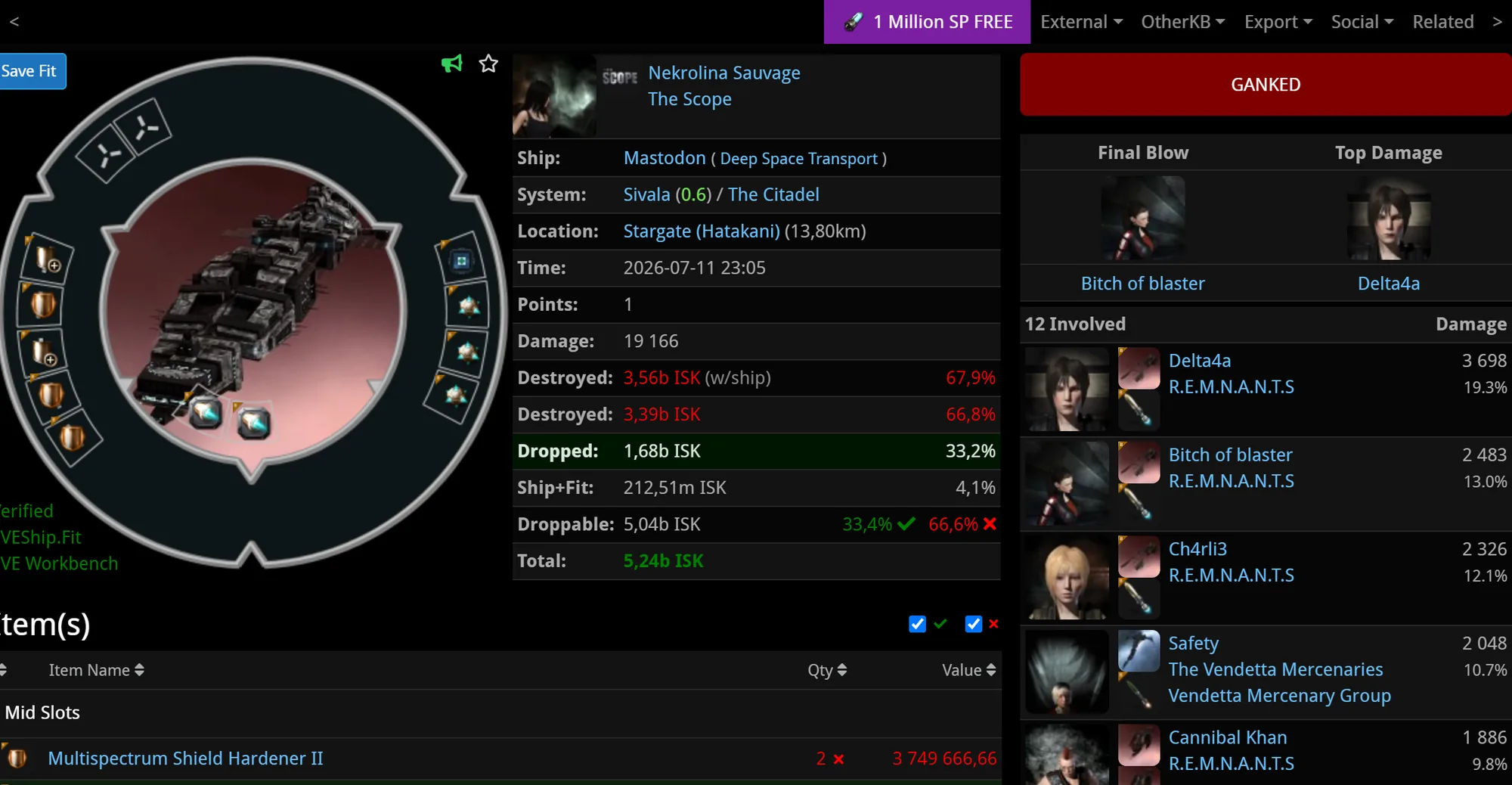
And let’s bust the myth people burn on right away. A DST has a separate compartment — the fleet hangar — and many think cargo hidden there is invisible to a scanner. Not true: a cargo scanner reads the fleet hangar exactly like the normal hold, and on destruction its contents drop as loot just the same. The only hold that genuinely can’t be scanned belongs to the blockade runner. So the anvil’s defence is the MWD+cloak trick and checking gate kills before you jump, not tank and not “hiding the price tag.” Against the anvil itself gankers most often bring Tornados: a high alpha volley from range punches through even its resistances if the cargo is worth it.
You got caught anyway
If you’re tackled and taking fire, you probably won’t save the ship, and that’s a normal part of the game. Don’t jettison the cargo into space (they’ll scoop it), don’t pay the bumper a “ransom” (pay and they’ll just kill you and take the cargo on top), don’t rage in local — that’s exactly what the ganker wants. Insurance returns part of the hull’s value but not the cargo: cargo isn’t insured at all. Ganking is legal under EVE’s rules — CCP won’t refund ISK, and there’s no one to complain to.
The right reaction isn’t emotion but analysis: could it have been avoided. Sometimes not — you just ran into people who wanted content, not your loot, and that’s part of the game. But more often the odds really can be cut: a scout a jump ahead, a checked route, a webber or a cloak suited to your ship, less cargo at a time. Next trip: not a bare hope in tank, but active piloting.
A checklist before undocking
Boil it all down to a habit. Common to all: 1) check the last hour of gate kills on zKillboard and EVE Gatecheck; 2) never autopilot; 3) make an insta-undock bookmark in Jita; 4) remember that tank on its own won’t save you from pros. Then per hull: freighter and jump freighter — a scout a jump ahead and a webber with three webs, don’t haul 10+ billion in one hull; the anvil (DST) — the MWD+cloak trick, for medium and fairly expensive cargo (T2 rigs, reactions); the blockade runner — a covert cloak and warp-speed rigs, for the expensive and light (implants, BPOs) through camps; the T1 hauler — no more than ~200M per trip plus an MWD with a cloak.
The one takeaway: there are no invulnerable haulers in high-sec, but almost anyone can be brought through alive — not by tank and not by prayer, but by hand. A scout ahead, a webber or a cloak suited to your hull, a checked gate and cargo discipline cut the risk several times over. Some gankers hit by the numbers, some for fun, so fly as if you can be attacked at any moment. Then you’ll both haul and arrive.
Risk is part of the margin
Every trip is a bet of capital against route risk. In Arbitrage the per-trip profit and ISK/m³ are computed for your ship, so the cost of safe delivery is visible at once — and it’s clear when hauling less or paying a courier is cheaper.
FAQ
Does high security (1.0) protect you from ganking?
No. CONCORD doesn’t defend the victim; it punishes the attacker after the fact: security only changes its response time (~19 s in 0.5, ~6 s in 0.9–1.0). An alpha ship like a Tornado needs one volley even in 1.0 — the fleet is just made bigger. So a gank is possible in any high-sec system, and 1.0 “safety” is a myth.
How much ISK can you safely haul in one trip?
Cargo discipline lowers the chance you get picked, but it’s no guarantee — many hit for fun too. A rough guide is not to pack more than ~3000 ISK per 1 EHP of the hull: for a T1 industrial that’s no more than ~200 million per trip, for a freighter it’s not 10+ billion in one hull (professionals keep collateral around five billion, and above that split it or call a jump freighter). But the main defence isn’t “haul less” — it’s active piloting: a scout, a webber, a cloak suited to your ship.
Can you hide cargo in a DST’s fleet hangar?
No. A cargo scanner reads the fleet hangar exactly like the normal hold, and on destruction its contents drop as loot just the same (50% per item). The only hold that genuinely can’t be scanned belongs to the blockade runner. Tank won’t save the anvil from pros; its defence is the MWD+cloak trick (a normal cloak + MWD, warping out on the timing) and checking gate kills before you jump, not “hiding the price tag.”
Does freighter bumping still work after the 2019 nerf?
Yes. Since 2019 a bumped ship auto-warps after 3 minutes, but the timer starts only after your warp command, and a warp scram resets it. A pre-staged gank fleet has more than enough time in three minutes, so a battleship bumper (usually a Machariel) remains a standard role at the gate.
Which hauler is safest for expensive cargo?
The blockade runner: its hold can’t be scanned, so the ganker sees no price tag and can’t compute profitability, while the covert cloak keeps it invisible for the whole warp. The downside is small volume. The alternative for larger sums is a courier contract (Red Frog up to 1.5 billion across high-sec, Purple Frog up to 10 billion): you pay for delivery and hand the risk to a pro.
Where do most ganks happen on routes out of Jita?
At chokepoints — systems the whole cargo flow must pass through. After Niarja moved to Pochven (2020) the main one is Uedama (0.5), the hottest system in high-sec; nearby are Sivala (0.6) and Balle (a junction toward Hek). Check recent kills in the system on zKillboard and EVE Gatecheck before undocking — activity comes in waves.